
Dreamt by Xochitl Grimm & Lucas Larson
Intro/Physical Space
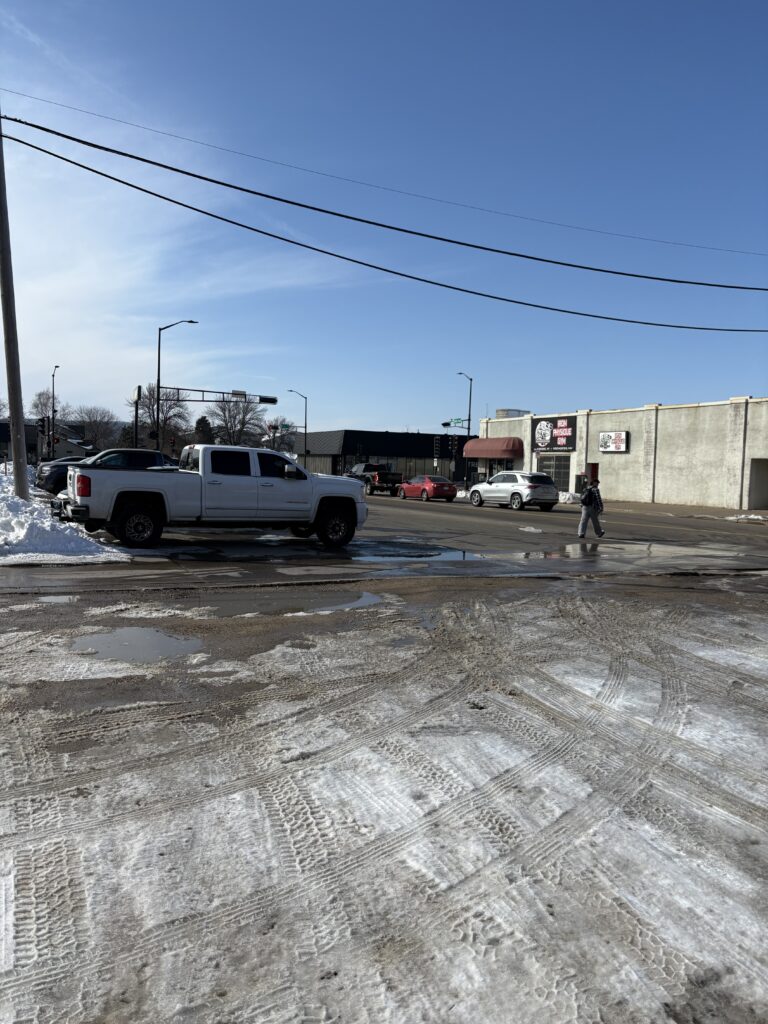
At 1552 Rose St., Wisconsin, La Crosse, there is a poorly lit parking lot surrounded by abandoned buildings and desolate alleyways. The parking lot itself is used mostly by “gym-bros” heading over to Iron Physique Gym across the street. Even in the daylight, you won’t see many people walking around. Rose Street (Highway 53) is busy at nearly all times of the day, cars always loudly rushing by.
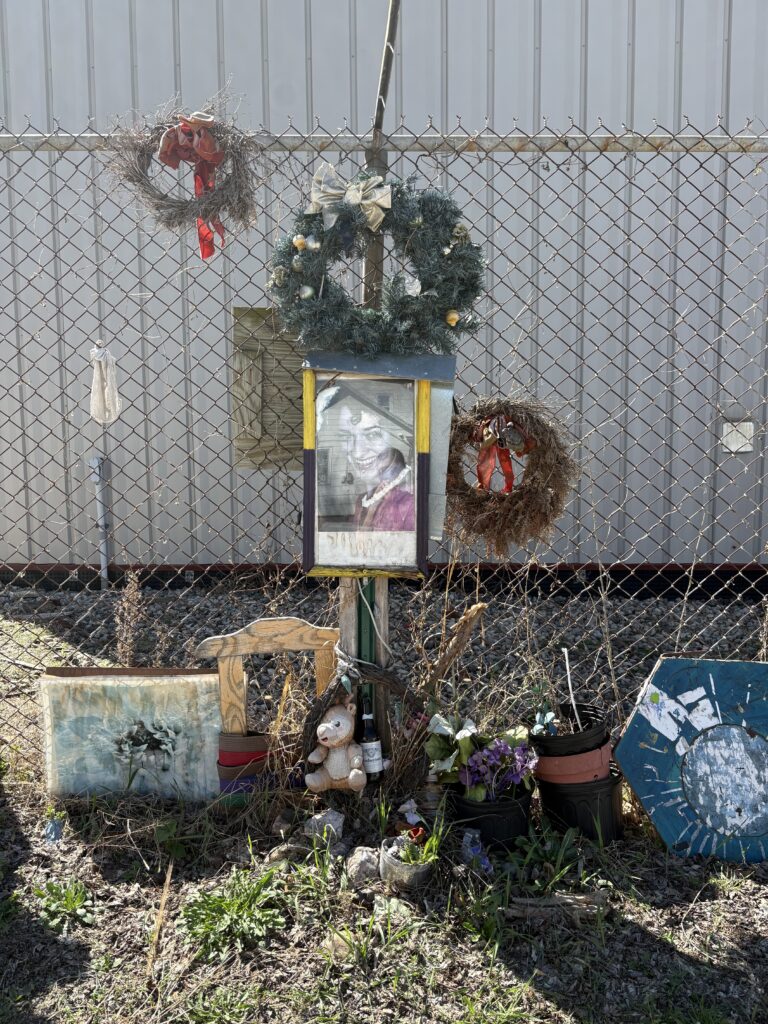
There’s a bit of relief from the gray concrete that surrounds the area: a mural of bright pink roses on the side of a building across the street. That building, which used to house a factory, is now used by various businesses, hidden from view of the street. One of the alleys is home to a memorial for a woman whose name and fate we don’t know, but a man plants flowers for her every year. Next door is the aforementioned gym, where I saw only men enter and exit. In fact, men are the only people I saw in the area. One man asked what I was doing, so I responded with the project summary and how our class is finding new ways to improve La Crosse, land of the parking lots. He responded, “Sounds like hard work. At least someone cares,” and kept on strolling.
History of Tattoo’s
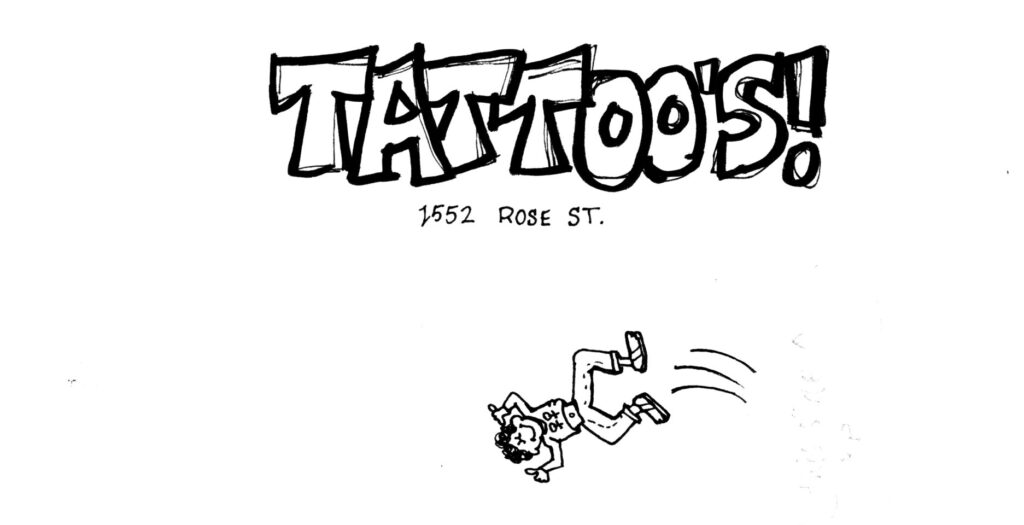
Tattoo’s was a bar that operated on the 1552 lot of Rose Street during the 1980s. The bar was owned and operated by a pair of lesbian women named Robyn and Marilyn, who strove to make their bar a safe space for the lesbian women in La Crosse. The bar was listed in the city directory as a “feminist connection tavern.” Tattoo’s held many events that were advertised in the Leaping La Crosse News, a newspaper specifically for lesbian women. Events included holiday parties, drink specials, and an annual tuxedo party,1 a staple in the gay community pre-Tattoo’s. Tattoo’s was more than just a space for people to gather and party, it was a hub for the tight-knit lesbian community. A space for themselves, to let loose. Evidence of the cultural importance of Tattoo’s can be seen in the archived issues of Leaping La Crosse, where events at the bar often didn’t list an address, because it was understood that people reading the paper knew where it was.
One of the newspaper’s issues had a handful of ads, ranging from the sale of an old stereo to a woman looking for a place to store her motorcycle for the winter.2 Tattoo’s was obviously a stronghold for a marginalized lesbian community in La Crosse and functioned as much more than a bar.
Zoning
Initially, we thought of proposing housing or some sort of community building for this lot instead of just parking. The city official for this district, Tamra Dickinson, explained that not much can be built here due to the installment of a right turn lane.3 According to La Crosse Zoning Codes, nothing over five feet tall can be built in this lot to ensure the line of sight is clear, despite the fact that many cars exceed that height.4
This land sits in La Crosse County Supervisor District One, in an area zoned as “light industrial.”5 This means that only certain kinds of buildings can be built in this district, and this parcel of land isn’t meant for housing. In addition, this area feels unsafe, and a few people recommended that I shouldn’t come here by myself, no matter the time of day, due to the masculine culture that might take offense to my feminine presence.
Exclusion of Tattoo’s
While researching Tattoo’s for this project we examined a collection of photographs that featured exterior images of every bar in La Crosse during the 1980s. With the assistance of one of UWL’s special collections archivists, Laura Godden, we determined that there were no pictures of Tattoo’s in the collection. In fact, we were unable to find any photos of Tattoo’s, inside or out, anywhere. We are unsure if this exclusion is purposeful, but it is worth noting. The lack of documentation of Tattoo’s, coupled with the memorial to the dead woman in the alley, contribute to the general feeling of a space that is no longer safe for women. It is incredibly sad for us to see a space that was previously a haven for women degrade to an area where women cannot feel comfortable.
Proposal
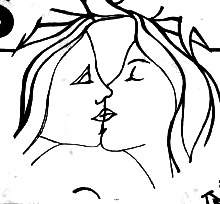
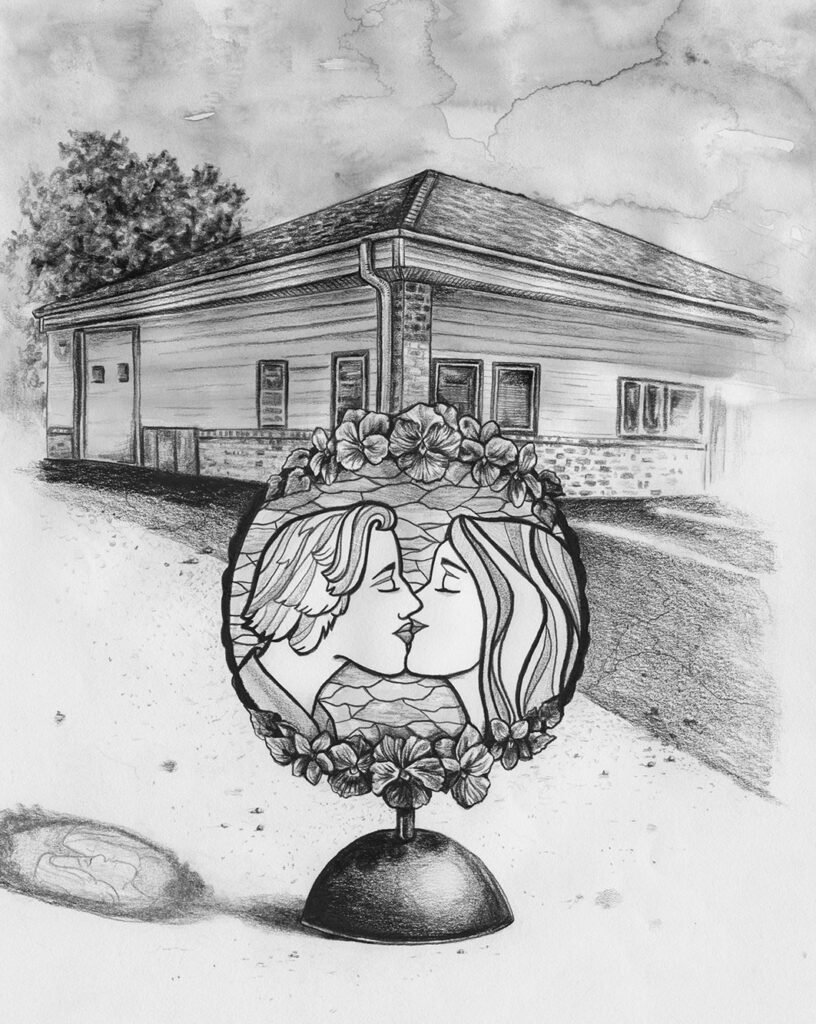
Instead of a parking lot, we propose to install a statue of two women embracing lovingly, modeled after an image in Leaping La Crosse of a cut-glass etching that used to be in Tattoo’s. Despite attempts to erase La Crosse’s queer and feminine history, this statue would be a reminder that queer people, especially women, still exist in La Crosse, and they will always exist. Such a statue will help the space break away from the masculine culture that currently overtakes the area and show the queer community that La Crosse sees them and that they belong.
REFERENCES
2 O’Sullivan, Mary F, “Classy Classifieds” Leaping La Crosse News, September 1981
3 Tamra Dickinson, telephone interview by Xochitl Grimm. March 5, 2026
4 City of La Crosse, Zoning Code, Section 17.18, Accessed 11 March, 2026